Assessments
Our assessments give us a clear, ongoing picture of your child’s learning. They help us share progress with whānau, tailor teaching, and provide the right support at the right time.
Better Start Literacy Approach (BSLA)
What is BSLA?
BSLA is a structured literacy approach that focuses on the critical 'building blocks' of reading and writing. It goes beyond just memorizing words; it teaches children how to understand the relationship between sounds and letters, develop a rich vocabulary, and build strong oral language skills. Find out more ››
How do the assessments work?
A key part of this approach is our online monitoring assessments. These are not "scary tests," but rather quick and engaging check-ins that help our teachers see exactly where each child is on their learning journey.
These assessments take place at specific intervals (usually after 10, 20, and 30 weeks of teaching) and look at:
Phonological Awareness: How well a child can identify and play with sounds in words.
Letter-Sound Knowledge: Matching the correct sounds to the letters on the page.
Oral Narrative Skills: The ability to retell a story and use new vocabulary.
Word Reading and Spelling: Applying their knowledge to decode new words and write them down.
Why do we assess this way?
The data from these assessments allows our teachers to be solution focused. By identifying a child’s strengths and next steps early on, we can:
Celebrate Progress: Share specific "wins" and growth milestones with whānau.
Tailor Teaching: Ensure that our classroom and small group lessons are exactly what each child needs at that moment.
Provide Early Support: Quickly identify any learners who may need extra "Tier 2" support to ensure no one is left behind.
The Ministry of Education Phonics Checks
At our school, we want every child to become a confident and capable reader. To support this, we use the Ministry of Education Phonics Checks, a consistent, nationwide tool designed to monitor how our youngest learners are progressing with their "decoding" skills (the ability to sound out words).
What are the Phonics Checks?
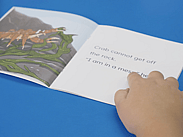
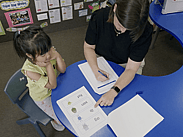
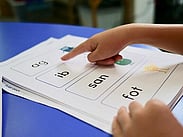
The Phonics Check is a short, one-on-one activity where a learner reads 40 words aloud to their teacher.
Real Words: Some words are everyday words like ‘shop’ or ‘blast’.
Pseudo-Words (Nonsense Words): Some words are "made-up" words like ‘zog’ or ‘quemp’. We use these because children can’t rely on memory to read them, they have to use their phonics knowledge to sound them out. This gives teachers a true picture of a child’s decoding ability.
When do they happen?
All schools in New Zealand perform these checks at two key milestones in a child's first year of school:
The 20-Week Check: Conducted after approximately 6 months (two terms) of schooling.
The 40-Week Check: Conducted after approximately 1 year (four terms) of schooling.
Why do we do them?
These checks are a vital part of our Structured Literacy approach. They allow us to:
Identify Needs Early: If a child is finding certain sounds or blending difficult, we find out early so we can provide extra support immediately.
Track Growth: By comparing the 20 week and 40 week results, we can celebrate the progress your child has made.
Tailor Our Teaching: The results help teachers plan exactly what sounds and skills to focus on next in the classroom.
How will I know how my child is doing?
The Phonics Check is a "low stakes" assessment, the children usually find it quite fun! Your child’s teacher will share the results with you and, most importantly, talk to you about how we can work together to support their reading journey at home.
Progressive Achievement Tests (PATs)
Understanding PAT: Tracking Progress in Years 3–6
As our students move into Year 3 and beyond, we begin using Progressive Achievement Tests (PATs). Developed by the New Zealand Council for Educational Research (NZCER), these assessments are used by almost all schools in New Zealand to help us understand how our learners are progressing in key areas of the curriculum.
What are PATs?
PATs are a series of standardised tests designed specifically for New Zealand learners. At our school, we primarily use them to assess:
PAT: Reading Comprehension – How well learners understand and interpret what they read.
PAT: Mathematics – How students apply their mathematical knowledge and problem-solving skills.
PAT: Listening Comprehension (often used in younger years) – How well students process and understand spoken information.
How do they work?
Unlike a simple "pass/fail" test, PATs use a unique scale (called a patme or patstat scale). This allows us to track a learner’s growth over time. Because the scale stays the same from Year 3 to Year 10, we can see how much a learner has "grown" from one year to the next, regardless of which specific test paper they sat.
Why do we use PATs?
To Inform Teaching: The results show us exactly which areas a learner is excelling in and where they might need a little extra help.
To Measure Growth: Instead of just looking at a snapshot in time, PATs allow us to celebrate the "distance traveled" by each learner over their years at school.
To Compare Nationally: They provide a "national reference," helping us ensure our teaching programs are meeting the standards of learners across the country.
A Supportive Environment
We know the word "test" can sometimes cause anxiety. We frame PATs as a way for learners to "show what they know." They are usually completed online or on paper in a relaxed classroom setting.
What do the results mean for you?
The data gathered from PATs is just one "piece of the puzzle." We combine these results with our daily classroom observations and other assessments to form a complete picture of your child’s learning. Your child’s teacher will discuss this progress with you during our regular conferences.
Student Monitoring Assessment Reporting Tool (SMART)
Starting in 2026, our school, along with primary and intermediate schools across New Zealand, is introducing a new way to monitor and report on student progress: SMART (Student Monitoring, Assessment and Reporting Tool).
What is SMART?
SMART is a digital assessment tool designed specifically for learners in Years 3 to 10. It aligns directly with the refreshed New Zealand Curriculum and helps teachers understand how children are progressing in the core areas of Reading, Writing, and Maths.
How does it work?
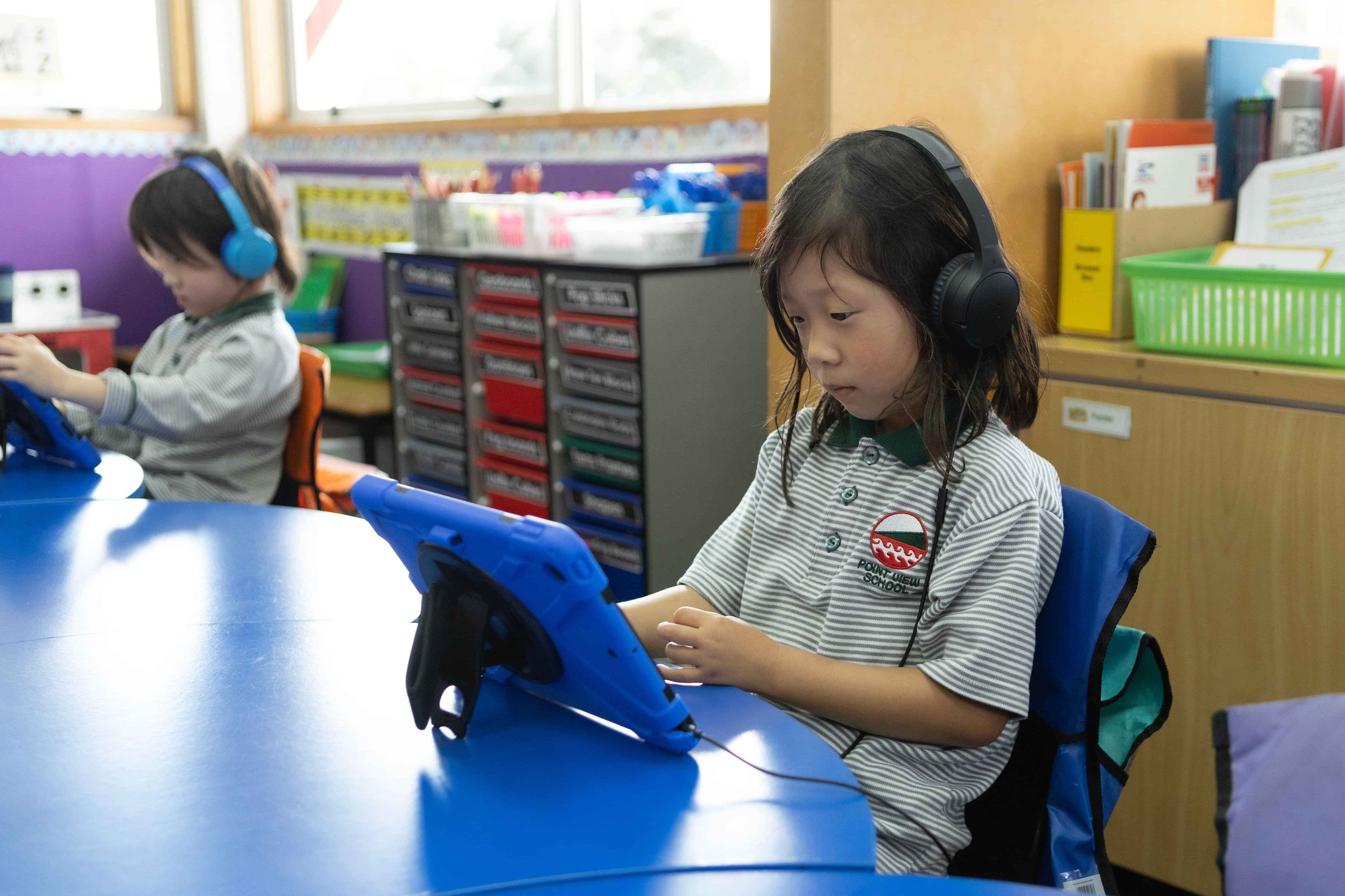
Twice a year (usually mid-year and end-of-year), learners will complete short, engaging activities on a computer or tablet.
Adaptive Learning: The tool is "smart", it adjusts the difficulty of questions based on your child's answers. This ensures the experience is not too hard or too easy, but "just right" to show what they truly know.
Low-Stakes: These are not high pressure exams. They are designed to be a normal part of classroom life that helps teachers gather "snapshots" of learning.
Why are we using SMART?
The goal of SMART is to provide national consistency. No matter which school a child attends in New Zealand, parents will now receive clear, easy to understand information about their child's progress.
By using SMART, our teachers can:
Identify Strengths and Gaps: See exactly where a student is excelling or where they might need a little extra "boost."
Track Progress Over Time: Instead of just looking at a single score, we can see how much a child has grown across the school year.
Inform Teaching: Use the results to plan lessons that meet the specific needs of every learner in the room.
Reporting to Parents
You will see the results of these check-ins in your child's school reports. We use five clear Progress Descriptors to show where your child is sitting in relation to curriculum expectations:
Emerging (Me hāpai ako)
Developing (Kua koke whakamua)
Consolidating (Whakatōpū)
Proficient (Kua tutuki)
Exceeding (Kua hipa rawa)
We believe that when parents and teachers have the same clear information, we can work together more effectively to support our learners to thrive.
Otago Maths Problem Challenge: Extending Our Mathematicians
At Point View School, we are committed to providing stretch and challenge for our students who show a strong aptitude for mathematics. One of the key ways we provide this extension for our Year 5 and 6 learners is through the University of Otago Problem Challenge.
What is the Otago Maths Challenge?
The Problem Challenge is a national mathematics competition organised by the Department of Mathematics and Statistics at the University of Otago. While primarily aimed at intermediate learners (Years 7 and 8), it is an excellent enrichment opportunity for mathematically gifted and talented Year 6 learners, and even some highly capable Year 5s.
How it Works
The challenge consists of five separate problem sets spread throughout the year (starting in April).
The Format: In each set, learners have 30 minutes to solve five high-level mathematical problems. The students are separated out and “test like conditions” are set to ensure all learners are using their own mathematical knowledge. A DP monitors and supervises students at all times.
Problem Solving: These aren't just "sums." The questions are designed to test logical thinking, pattern recognition, and the ability to apply strategies like "guess and check," drawing diagrams, and working backward.
Collaborative Reflection: After the timed session, learners often work together to share their strategies, which helps them see multiple ways to arrive at a solution.
Note: The answers are marked away from the children by a DP once the 30 minutes has ended. The use of AI is not permitted and learners' computers will be monitored and web browser history checked through the N4L network.
Why Participate?
Healthy Competition: Learners get to test their skills against approximately 30,000 other children across New Zealand.
Resilience and Growth: The problems are designed to be challenging. Scoring a 3, 4, or 5 out of 5 is a significant achievement and helps learners build "mathematical stamina."
National Recognition: At the end of the year, certificates are awarded for Participation, Merit (top 25-30%), and Excellence (top 10%). The very top performers nationally may even receive book voucher prizes.
Who should take part?
This programme is specifically designed for students who are already working confidently above their expected curriculum level and are looking for a challenge that goes beyond standard classroom maths. The teachers select the learners carefully.
International Competition and Assessment for School (ICAS)
Stretching Academic Potential
We are pleased to offer our learners in Years 4 to 6 the opportunity to participate in the ICAS Assessments (International Competitions and Assessments for Schools).
What is ICAS?
ICAS is an independent, skills based assessment program developed by Janison (formerly through the University of New South Wales). Unlike school-based assessments that track progress against the New Zealand Curriculum, ICAS is a competitive academic program that allows students to test their higher-order thinking and problem-solving skills against peers from across New Zealand, Australia, and over 20 other countries.
Subjects Offered
learnerts can choose to sit assessments in a variety of areas, including:
English & Writing: Focused on textual analysis, grammar, and creative/persuasive expression.
Mathematics: Challenging learners with complex data interpretation and problem-solving.
Why Participate?
Academic Stretch: ICAS questions are designed to be challenging. They go beyond the classroom curriculum to identify students with particular strengths in specific subjects.
Experience in Formal Assessment: It provides learners with valuable experience in sitting formal, timed, online assessments in a supportive environment.
Recognition of Excellence: Every learner receives a certificate documenting their achievement (High Distinction, Distinction, Credit, Merit, or Participation). Top-performing students in New Zealand may even be eligible for prestigious ICAS medals.
Is ICAS Right for My Child?
ICAS is an optional, parent-funded enrichment opportunity. Because the assessments are designed to be quite demanding, they are best suited for learners who are already exceeding the expected curriculum level and who enjoy the challenge of a rigorous academic competition.
How to Register
A member of the Point View Team will send out information via Hero for how to register and pay for this option of assessment.
Making an Overall Teacher Judgement (OTJ)
At Point View School, we believe that no single test can capture the full picture of a child’s learning. To give you the most accurate and honest reflection of how your child is doing in Reading, Writing, and Mathematics, our teachers use what is called an Overall Teacher Judgment (OTJ).
What is an OTJ?
An OTJ is not just a test score. It is a professional judgment made by the teacher after looking at a wide range of evidence gathered over time. Instead of relying on a "one-off" assessment where a child might have an "off day," an OTJ looks at the consistency of their learning across different contexts.
How do teachers make these judgments?
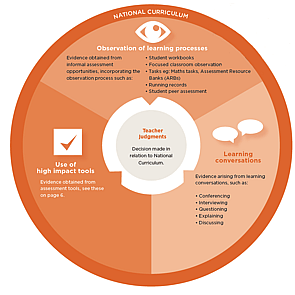
Teachers use a process called "Triangulation." This means they look at three different types of evidence to build a dependable "big picture" of your child’s achievement:
Observation: Watching the learner as they work in class, how they solve problems, how they interact with others, and how they apply new skills in the moment.
Learning Conversations: Talking with the learner to find out what they know, what they understand, and where they think they are stuck. This helps the teacher see the "thinking" behind the work.
Formal Tasks/Assessments: Using standardised tools (like PATs, or SMART, ICAS) and classroom tasks to see how the learner performs under specific conditions.
Why is this better than just a test score?
A test is only a snapshot of one moment in time. By using an OTJ, teachers can account for:
Progress over time: Seeing how a learner has grown from the start of the term to the end.
Depth of understanding: Ensuring a child hasn't just memorised a fact but can actually use that knowledge in different ways.
Validity: Checking that the evidence from a test matches what the teacher sees every day in the classroom.
Moderation: Ensuring Fairness
To make sure our judgments are consistent across the whole school, our teachers engage in moderation. This is where teachers work together, looking at samples of learner work and discussing their judgments. This ensures that a "Proficient" or "Exceeding" judgment in one classroom means the same thing in another.
Learning Together By using OTJs, we move away from "pass or fail" and instead focus on your child's unique learning journey. It helps us, and you, understand exactly what they have mastered and what their very next steps in learning will be.
Contact
25 Kilkenny Drive, Dannemora,
Auckland 2016, New Zealand
Phone: +64 9 274 0637
Term Dates 2026
Term 1: Wed 4 Feb – Thu 2 April
Term 2: Mon 20 April – Fri 3 July
Term 3: Mon 20 July – Fri 25 Sept
Term 4: Mon 12 Oct – Wed 16 Dec
Term Dates 2027
Term 1: Tues 2 Feb – Fri 9 April
Term 2: Tues 27 April – Fri 2 July
Term 3: Mon 19 July – Fri 24 Sept
Term 4: Mon 11 Oct – Wed 15 Dec